
30-Day SAT Study Plan 2026 to Boost Your SAT Score Fast

On this page
- Your 30 Day SAT Study Plan 2026 for Real Score Growth
- How to Start Your SAT 2026 Prep on Day One
- SAT 2026 Week 1 Study Plan: Complete 300 Reading, Writing, and Math Questions in 7 Days
- SAT 2026 Week 2 Plan: Build Speed and Accuracy with 350 Medium Level Questions in 7 Days
- SAT 2026 Week 3 Plan Master Timed Modules with 300 Mixed Reading, Writing, and Math Questions
- SAT 2026 Week 4 Plan: Take 2 Full Digital SAT Tests and Fix All Repeated Mistakes Before Test Day
- Digital SAT Tips 2026 and Smart Practice Test Methods That Boost SAT Scores
- Your SAT Test Day Plan 2026 for a Calm Mind and a Strong Score
- Conclusion
- Frequently Asked Questions
A good SAT score opens a world of possibilities for you. For many students, that means aiming for the1200 to 1400 SAT rangeif they want safe options and pushing above 1450 if they want competitive colleges. Most students realise they need to improve their SAT score when it is already too late.
A strategic 30 Day SAT Study Plan for 2026 can still help you lift your score by one 100-200 points because the digital SAT rewards accuracy and steady daily work more than long study hours.
If your reading feels a tad bit slow, if math questions take too much of your time, or if your last practice test score made you panic, this study plan will give you a strategy to move forward with your preparation. You will see how to start on day one with confidence, how to move forward week by week using a targeted study plan, how to use digital SAT strategies without getting overwhelmed, and how to ace practice tests.
By the end of this guide, you will know exactly what to study each day for the next thirty days and how to walk into your SAT with a confident score plan.
Your 30 Day SAT Study Plan 2026 for Real Score Growth
Before we jump into the study plan, here is a quick way to look at it. You have thirty days, which is not a lot, but it is enough if you move in the right order.
How to Start Your SAT 2026 Prep on Day One
Start your plan with one full digital practice test. The goal here is clarity. Your baseline results show your starting score, your strong areas, and the sections that need work. Students often jump into random practice, but the baseline helps you move in the right order.
After the test, read your score report. Check how you performed in reading, writing, and math. Make a simple list of topics that slowed you down. This list becomes your guide for the next thirty days.
Create a small study log. Write your baseline score, the topics you want to improve, and a realistic target score. Many students see a 100-point lift in a month when they follow a clean structure.
SAT 2026 Week 1 Study Plan: Complete 300 Reading, Writing, and Math Questions in 7 Days
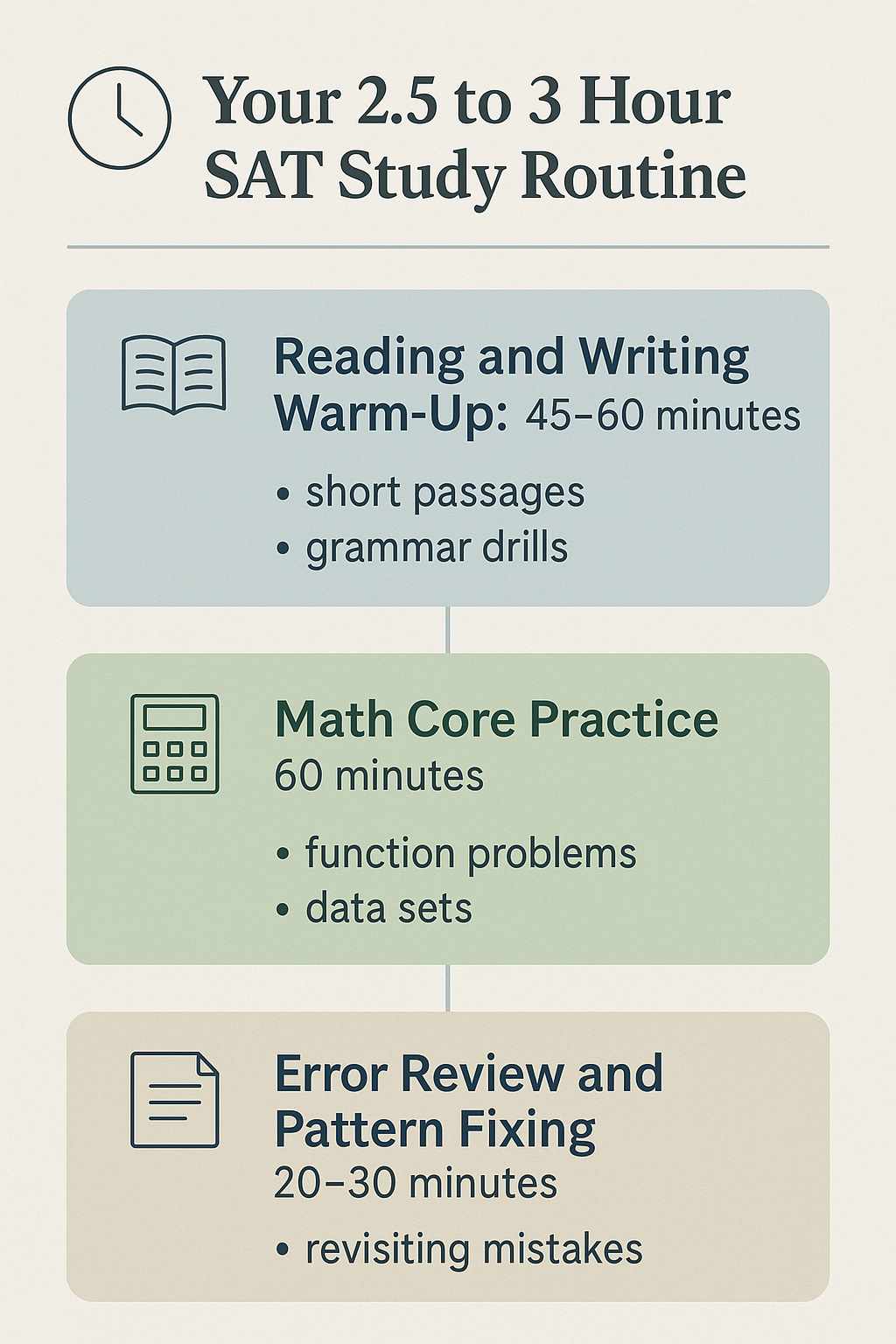
Week 1 is about building a clean foundation. You should spend about 2.5-3 hours each day studying, making for approximately 18-20 hours in total for the first week. The focus is on accuracy, gaining comfort with the digital test format, and eliminating basic mistakes.
In reading and writing, use short passages and simple grammar sets so your mind adjusts without pressure. You do not aim for speed yet; aim for being steady and consistent. In math, the goal is to strengthen your building blocks: linear equations, functions, ratios, percentages, and basic data interpretation. TheseSAT math topicsare the ones that show up most frequently and give you the fastest score gains. Each day, end with a brief review of your mistakes; this is where real improvement happens.
For resources, use the College Board Bluebook App, the Official SAT Question Bank, and for reading and writing, refer to The Critical Reader by Erica Meltzer. For math, start with the PWN SAT Math Guide (basic chapters). Also, download the free IvyStrides SAT Mistake Tracker Template to log errors as you go.
Here is a day-to-day SAT study plan for week 1:
| Day | Hours | Focus | Questions | Source |
| Day 1 | 2.5-3 hrs | Reading basics | 25-30 | Bluebook reading sets |
| Day 2 | 2.5-3 hrs | Reading basics | 25-30 | Official SAT reading bank |
| Day 3 | 2.5-3 hrs | Writing and grammar | 35-40 | Official SAT grammar bank, Kaplan SAT Writing Basics |
| Day 4 | 2.5-3 hrs | Writing and grammar | 35-40 | The Critical Reader |
| Day 5 | 2.5-3 hrs | Math basics | 30-40 | PWN Math Guide |
| Day 6 | 2.5-3 hrs | Math basics | 30-40 | Bluebook math drills |
| Day 7 | 2.5-3 hrs | Mixed accuracy day | 60-80 | Official SAT question bank |
SAT 2026 Week 2 Plan: Build Speed and Accuracy with 350 Medium Level Questions in 7 Days
In week 2, you should slightly increase the pace and start challenging yourself. You will have to allocate around 18-22 hours in total. Introduce more timed tasks and slightly harder questions to build mental stamina.
In reading, you still practice short passages, but now you can include evidence and reasoning questions. Your writing practice progresses to flow and structure rather than only grammar. For math, you begin with solving multi-step problems, data interpretation, and functions that combine topics.
Use the Official SAT Question Bank for higher-level reading and writing. For math, use PWN the SAT Math Guide medium chapters, and Official SAT Math Drills. On our website, grab the SAT Vocabulary Flashcards and the SAT Formula Sheet to support your writing and math throughout this week.
Here is a day-to-day SAT study plan for week 2:
| Day | Hours | Focus | Questions | Source |
| Day 8 | 2.5-3 hrs | Timed reading sets | 30 | Bluebook reading timed |
| Day 9 | 2.5-3 hrs | Reading + writing mix | 40 | UWorld reading & writing |
| Day 10 | 2.5-3 hrs | Writing structure | 35 | The Critical Reader |
| Day 11 | 2.5-3 hrs | Math medium sets | 35-40 | PWN Math Guide |
| Day 12 | 2.5-3 hrs | Math word problems | 30 | PWN Math Guide |
| Day 13 | 2.5-3 hrs | Reading + math mix | 40-50 | Official SAT question bank |
| Day 14 | 2.5-3 hrs | Accuracy check | 30 | Bluebook |
SAT 2026 Week 3 Plan Master Timed Modules with 300 Mixed Reading, Writing, and Math Questions
Week 3 is typically the most challenging and the most important. You will spend around 20-24 hours studying this week. Your SAT reading strategy includes inference, purpose, and harder evidence questions. Writing includes logic and flow sets. Math covers advanced functions, systems of equations, geometry, and multi-step data problems. You also begin timed modules of 20-30 minutes to acclimate your mind to test mode.
Learn to use Bluebook SAT modules, UWorld hard sets, and PWN the SAT Math Guide advanced chapters. On the IvyStrides website, you can also grab the Digital SAT Prep Guide to help pace modules and manage adaptive difficulty. By the end of week three, you should feel comfortable switching between question types, handling pressure, and not losing time to complex questions.
Here is a day-to-day SAT study plan for week 3:
| Day | Hours | Focus | Questions | Source |
| Day 15 | 3 hrs | Timed reading module | 30 | Bluebook |
| Day 16 | 3 hrs | Reading + writing mix | 40 | UWorld |
| Day 17 | 3 hrs | Timed math module | 35-40 | PWN Math Guide |
| Day 18 | 3 hrs | Hard reading practice | 30 | The Critical Reader |
| Day 19 | 3 hrs | Mixed math sets | 40 | Official SAT questions |
| Day 20 | 3 hrs | Mixed sets full | 50 | Bluebook |
| Day 21 | 2.5-3 hrs | Review & adjust | 30 | IvyStrides mistake log |
SAT 2026 Week 4 Plan: Take 2 Full Digital SAT Tests and Fix All Repeated Mistakes Before Test Day
This final week brings your one-month plan full circle. You should commit around 20-24 hours this week. Begin by taking a full digital SAT using the Bluebook App exactly as you will on test day. That shows your current level and highlights your final weak spots. The bulk of your time is then devoted to reviewing those mistakes, polishing recurring errors, and staying calm rather than learning new topics.
For this week, resources include Bluebook full tests, the Official SAT Question Bank for review, and the IvyStridesfree SAT Test Day Checklistto help you prepare mentally and practically. In math, revisit formulas using the SAT Formula Sheet from IvyStrides and target only the topics you consistently missed. Your writing and reading sessions stay short but focused on clarity and timing.
Here is a day-to-day SAT study plan for week 4:
| Day | Hours | Focus | Questions / Task | Source |
| Day 22 | 3 hrs | Full SAT test | Complete test | Bluebook |
| Day 23 | 2.5-3 hrs | Mistake review | 20-30 targeted questions | Notebook & Official bank |
| Day 24 | 3 hrs | Reading + math review | 30-40 questions | Official SAT |
| Day 25 | 2.5-3 hrs | Writing clarity | 30 questions | The Critical Reader |
| Day 26 | 3 hrs | Mixed light practice | 20 questions | Bluebook |
| Day 27 | 3 hrs | Full SAT test | Complete test | Bluebook |
| Day 28-30 | ~2 hrs daily | Calm revision only | small sets/checklists | IvyStrides “SAT Test Day Checklist” |
Digital SAT Tips 2026 and Smart Practice Test Methods That Boost SAT Scores
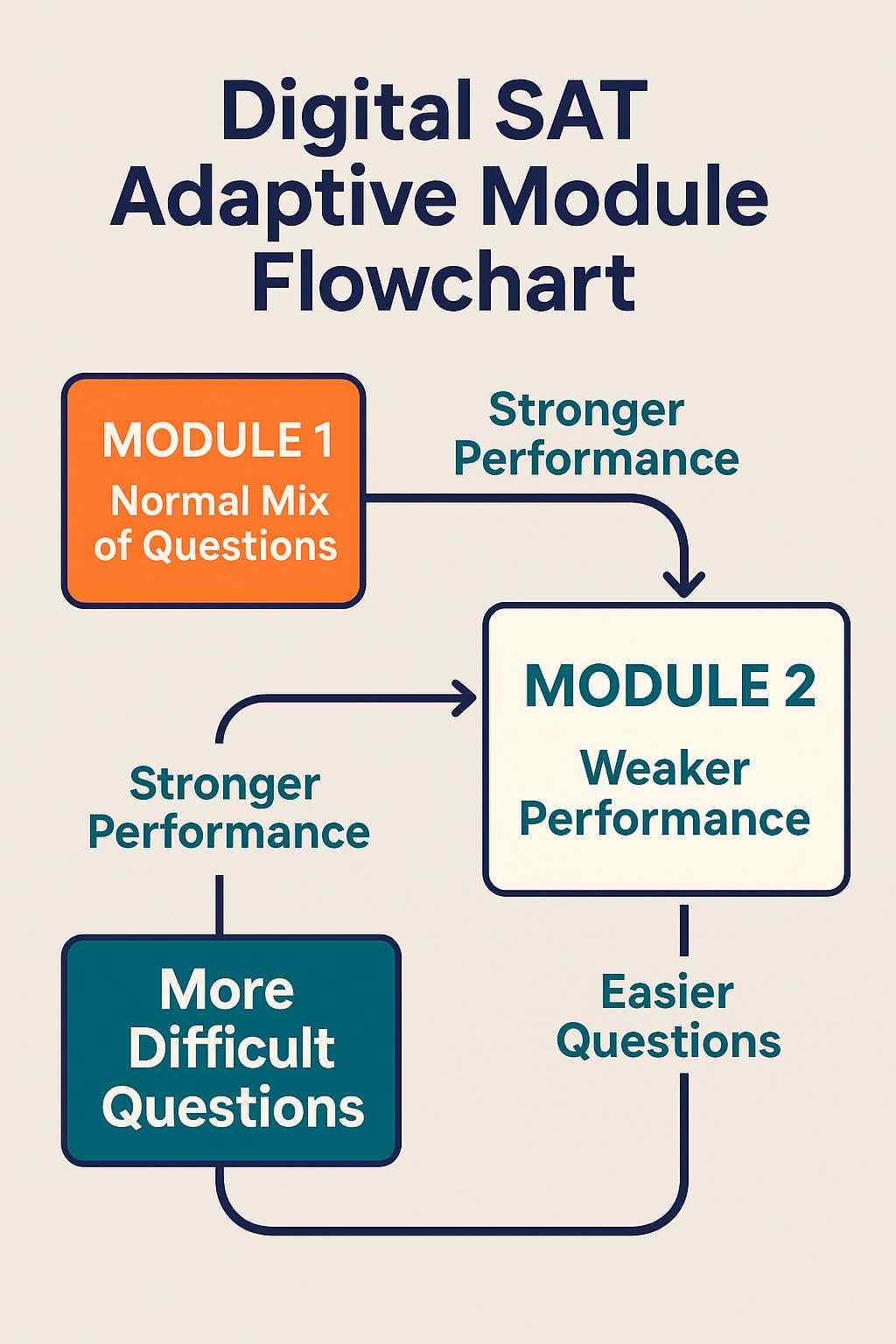
The digital SAT becomes easier once you understand how the system behaves. The test runs in two modules for each section. Module one gives a mix of easy, medium, and a few tricky questions. Your score in module one decides whether module two becomes a higher difficulty set. You do not need a perfect start. You only need steady accuracy in the first 20-30 questions.
Reading on a screen takes practice. Keep your eyes moving across the short passages and avoid reading the same line again and again. Work with the Official SAT reading bank and Bluebook timed sets for 10-15 at a time until your rhythm feels natural. Use the free Digital SAT Time Management Guide from the our website to learn how to pace each module without stress.
The calculator is availablefor the entire math section, so use it wisely. Do easy steps in your head and save the calculator for functions, expressions, and data problems. This keeps your timing balanced. PWN the SAT and Official SAT math modules give the best mix of calculator-friendly questions.
When you take practice tests, sit in a quiet room and treat the test like the real thing. Put your phone away. Respect the timer. After finishing the test, spend more time reviewing your mistakes than solving new questions. Your growth comes from fixing repeated errors. Use the IvyStrides “SAT Mistake Tracker” to record the topics that keep slowing you down.
If your accuracy improves by even ten percent, your score will rise on the real SAT. Accuracy is the single strongest indicator of score growth in a 30-day plan.
Your SAT Test Day Plan 2026 for a Calm Mind and a Strong Score
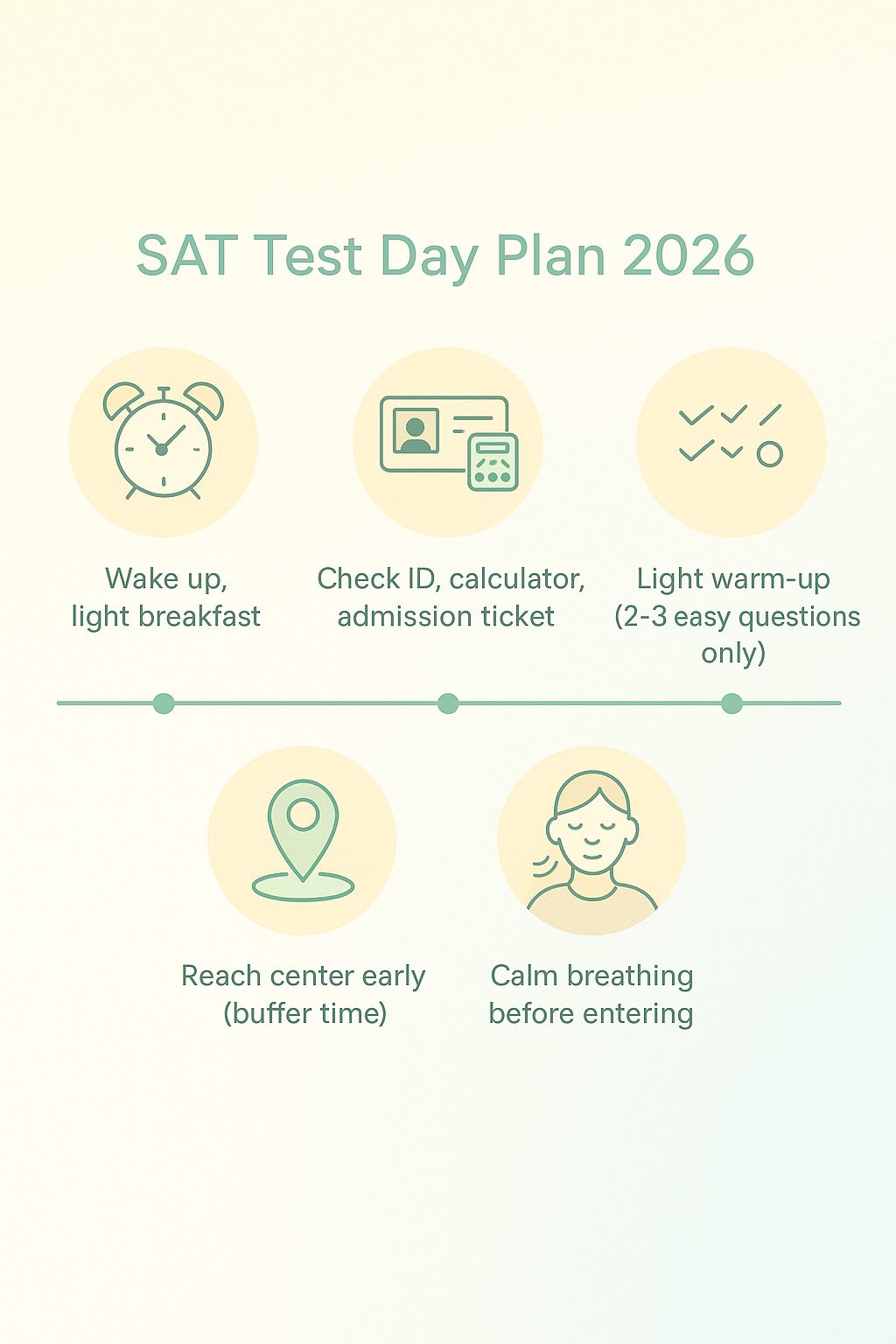
Your SAT test day needs to feel as normal as possible. You have already studied for weeks. Check twice about what to take at the SAT exam center. Wake up at a steady time, eat a filling breakfast, and warm up with three to five easy questions if you feel like it. Do not open anything new. Light practice keeps your mind awake without pressure.
Reach the test center early so you do not rush. A calm walk into the building helps more than you think. Take one slow breath before entering the room. This single pause settles your nerves and sets your pace for the next couple of hours.
Once the SAT begins, move question by question. Do not try to finish fast. If a question feels strange, choose a reasonable answer and move on. The SAT has no penalty for guessing, so make sure every question has an answer before the time ends. Keep your eyes on the clock in a relaxed way and stay steady.
If you feel stuck at any point,take one slow breath to reduce stressand return to the question. This resets your attention. If you think your thoughts are rushing, remind yourself that you have already completed dozens of practice hours in the last month. Your mind knows what to do.
After the test, walk out without comparing your performance with friends. Go home, eat something warm, and give your brain a break. You have already put in the work. Let the score come when it comes.
Conclusion
You now have a complete 30-day SAT 2026 study plan that shows you how to start on day one, how to move through each week, and how to use the digital SAT tools in a way that actually helps your score. You saw how to handle your basics, when to add timed practice, when to take complete tests, and how to calm your mind before test day. This is the same structure many students use when they need a fast but steady score lift.
If you follow this plan at your own pace, you will walk into the SAT with more control and less confusion. Yonly need a targeted prep routine and a little consistency.
If you want an experienced mentor to look at your progress and guide you with a study plan that fits your pace, get in touch with IvyStrides.
Book Your SAT Strategy Call with IvyStrides today
Frequently Asked Questions
How can I study for the SAT in thirty days if my school workload is heavy?
Keep your study time short and steady. One hour a day is enough if you follow a consistent routine and review your mistakes each week.
What is a realistic score increase with a 30-day SAT study plan in 2026?
Many students see a 100-200 point lift when they follow a structured month-long plan with two complete practice tests.
What should I study first if I am starting SAT prep from zero?
Start with a complete practice test. Your score report will show where to begin. Most students start with basic reading skills and simple algebra.
How many complete practice tests should I take in a one-month SAT plan for 2026?
Two complete tests are enough. One in week one or two and one in week four. Spend more time reviewing them than taking more tests.
What is the best study routine for the digital SAT in a short timeline for 2026?
Work in small blocks. Short reading passages, daily math drills, and a few timed sets each week help you adjust to the screen-based format.
Can I get a 1400 with only one month of SAT prep in 2026?
Yes, if your baseline is close and you focus on accuracy. Strong basics and review sessions matter more than long study hours.
What should I do if I fall behind on my 30-day SAT plan?
Continue from the next day. Do not restart the plan. A steady routine is more important than perfect daily completion.
Should I study both reading and math every day in a one-month SAT study plan?
It helps. Short daily practice in both sections builds balance and keeps your score growing in the right direction.
What is the best way to review SAT mistakes in a thirty-day schedule?
Write down repeated errors and fix the pattern. This small list usually brings the most significant score jump in a short timeline.
How do I handle tough questions on the SAT when I am on a tight schedule?
Move ahead and return later. The SAT has no penalty for guessing, so an educated guess is better than spending too long on one question.

Two decades teaching quantitative and verbal aptitude on standardized tests. Rare dual expertise across Math and Verbal — particularly effective for students with gaps on both sides. Senior AP Mentor for our Calculus and English tracks.